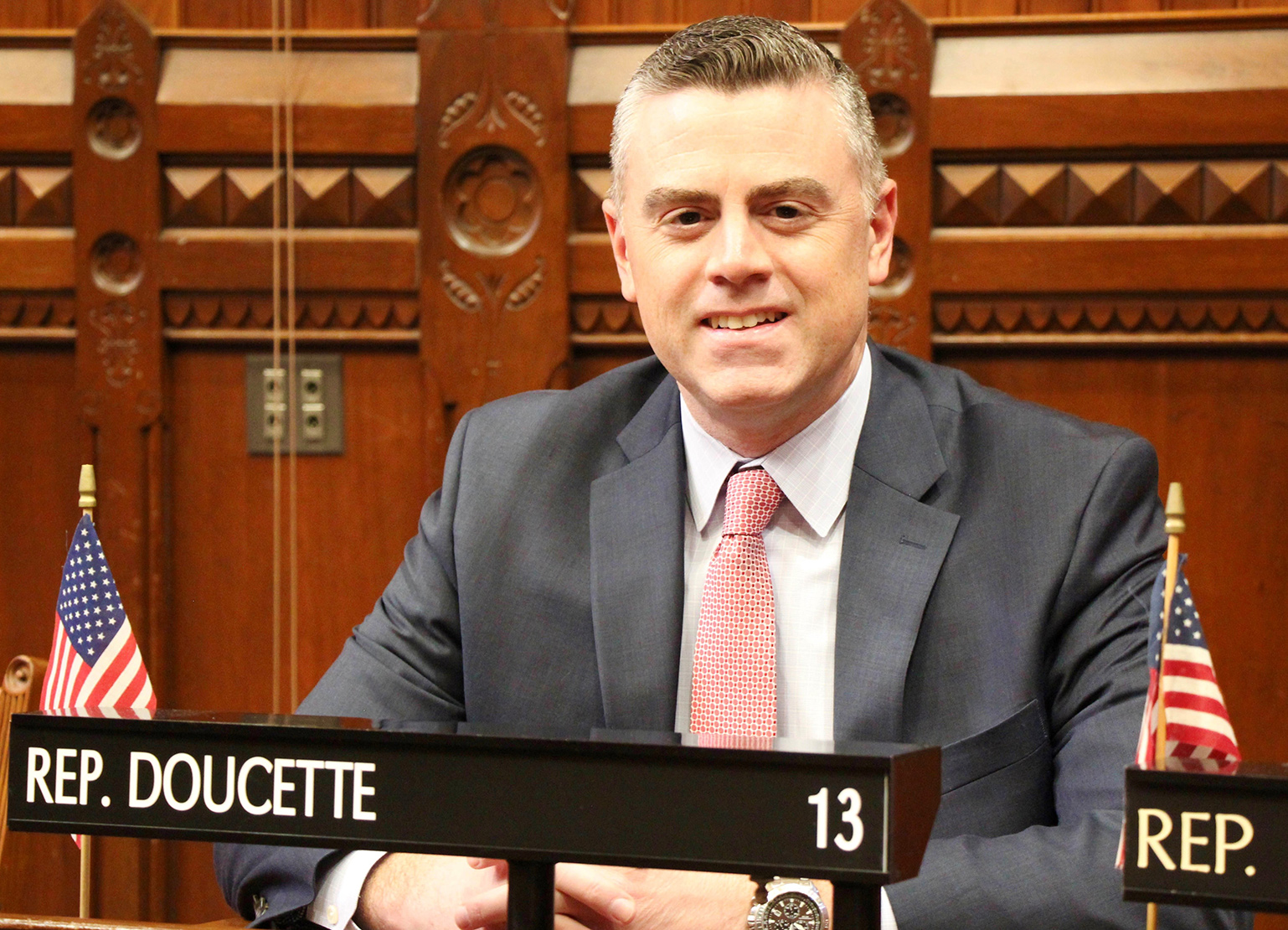
This week, the House concluded its legislative session, wrapping up months of hard work to deliver for the people of Connecticut.
In this eblast, I want to tell you about some of the most important pieces of legislation we passed, starting with the state budget.
In our district, we delivered millions for our residents, including over $8.8 million for Manchester and Glastonbury. This money include education funds, town aid, and various grants. You can read below for more information about what this budget will do for our state.
A Budget that Empowers Our Community
After months of negotiation, House Democrats shepherded passage of a bipartisan budget demonstrating that compromise remains the most effective way to govern.
Together, we produced a 2027 budget that significantly boosts support for the state’s education system, increases crucial investments in housing and transportation, supports town and city budgets, and more—all while safeguarding the state's strong fiscal outlook, including $1 billion toward paying down long-term debt.
This budget includes:
Over $300 million relief package for cities, towns, and schools
$190 million in direct support for schools
$100 million to address local tax increases
$12 million to establish universal free school breakfast programs across the state
Expanded grants for successful special education programs
Numerous grants to towns to address the rising costs associated with construction and purchasing
$4 million to help communities where three hospitals abruptly came off the tax rolls
A historic agreement with our hospitals
Providing them with much-needed tax relief
Maximizing federal funding for health care
Setting up a system to address rising costs
More investments in transportation options for our residents
Increased funding for Shoreline East rail
Funded successful "micro-transit" public transportation programs
Helped prevent hikes in bus fares
Making Connecticut more affordable for working families
Expanding sales tax-free week to include clothing, shoes, and backpacks under $300 (from $100)
Making basic school supplies tax-free, including backpacks, lunchboxes, notebooks, pens, pencils, crayons, rulers, and paper
Creating a family caregiver tax credit for residents caring for a loved one
Investing in Connecticut businesses and job growth
Helping small businesses offer health care support by providing a tax credit when they contribute toward employees’ individual health insurance coverage.
Supporting small businesses and biotech companies through a new research and development tax credit to help them grow and create jobs in our state
Taking Aim at Property Taxes
$162M new Education Equalization Grant to address underfunding in our current school funding formula
Additional 2% for the towns that have seen recent population decreases
$100M in new funding to cities and towns
Connecticut residents made a call for help in many areas. Connecticut lawmakers heard it and answered in a strong, bipartisan way.
Choosing Healthcare Over Profit
The legislature passed SB 196 this week, which limits private equity's influence over hospitals and ensures medical professionals are making decisions about patient care, not those seeking a financial profit.
We have seen the detrimental affects of for-profit ownership at Manchester Memorial Hospital. As ownership sought profits, the hospital steadily declined into bankruptcy. With SB 196's passage, we can move one step closer to ensuring no other hospital must deal with this concerning trend.
Responsible AI Use in Connecticut
The legislature recently passed two bills related to responsible use of artificial intelligence in Connecticut.
The first is Senate Bill 5: An Act Concerning Online Safety, AKA the C.A.R.T. Act.
The C.A.R.T. Act creates clear standards for powerful AI systems, while preparing Connecticut's residents, workers, students, small businesses, public agencies, and institutions for an AI-driven economy. AI is already affecting our economy, workplaces, online platforms, and the information Connecticut residents encounter every day. Senate Bill 5 responds to the new reality of AI through targeted protections, transparency for consumers, and system accountability.
This legislation targets areas where AI is making a meaningful impact on residents' lives, including employment-related automated decision tools, consumer disclosures, synthetic media provenance, youth online safety, and workforce preparation. Connecticut residents are already being impacted by AI systems. It is our state's responsibility to take action to set clear expectations to keep residents protected from harmful AI practices.
Senate Bill 5 now moves to the Governor's desk to be signed into law.
The second is Senate Bill 4: An Act Concerning Consumer Privacy and Protection will safeguard Connecticut residents’ personal information from exploitation by data brokers, surveillance technology companies, and federal agencies.
This bill makes it easier to exercise your right to delete your data from data brokers and people tracking websites and prevents predatory surveillance pricing. As technology evolves, our laws must evolve with it. Senate Bill 4 takes critical action to strengthen privacy protections, promote transparency, and ensure Connecticut consumers are treated fairly.
Senate Bill 4 will target the following specific threats to consumer privacy:
Data brokers: Consumers may request, at no cost, the deletion of any personal data collected by a data broker.
Dynamic pricing: Strict disclosure requirements apply when businesses use algorithmic pricing to increase prices.
Geolocation data: Controllers and processors are banned from selling or sharing precise geolocation data.
Genetic Testing: Consumers would have the right to their own genetic data when using direct to consumer genetic testing services and create more transparency in their policies.
Volume of Ads: Streaming platforms cannot transmit the audio of any commercial advertisement at a volume that is louder than the volume established by the Federal Communications Commission for television commercials.
Modernizing Connecticut's Renewable Energy Programs
Connecticut has striven to be a leader in renewable energy, and this approach ensures we keep moving forward while prioritizing affordability. HB 5340 modernizes Connecticut’s renewable energy programs by introducing measures meant to make them more reliable, consistent, and flexible to economic fluctuations.
This bill will:
Create clear annual megawatt and budget targets so renewable energy programs remain financially sustainable, and ratepayer impacts stay predictable and focus on investments that result in savings for ratepayers holistically
Give state regulators the flexibility to adjust programs year-to-year to remain within overall budget limits instead of being tied to rigid annual caps that may not reflect market conditions
Create dedicated solar rates for low-income residents, residents in distressed municipalities, and affordable multifamily housing residents
Encourage municipalities to adopt an existing streamlined solar permitting platform (Solar APP +) to help simplify and speed up the permitting process
As electricity demand grows, we must ensure that our energy programs are cost effective and efficient.
As always, please feel free to email me at Jason.Doucette@cga.ct.gov or call my office at 860-240-8584.