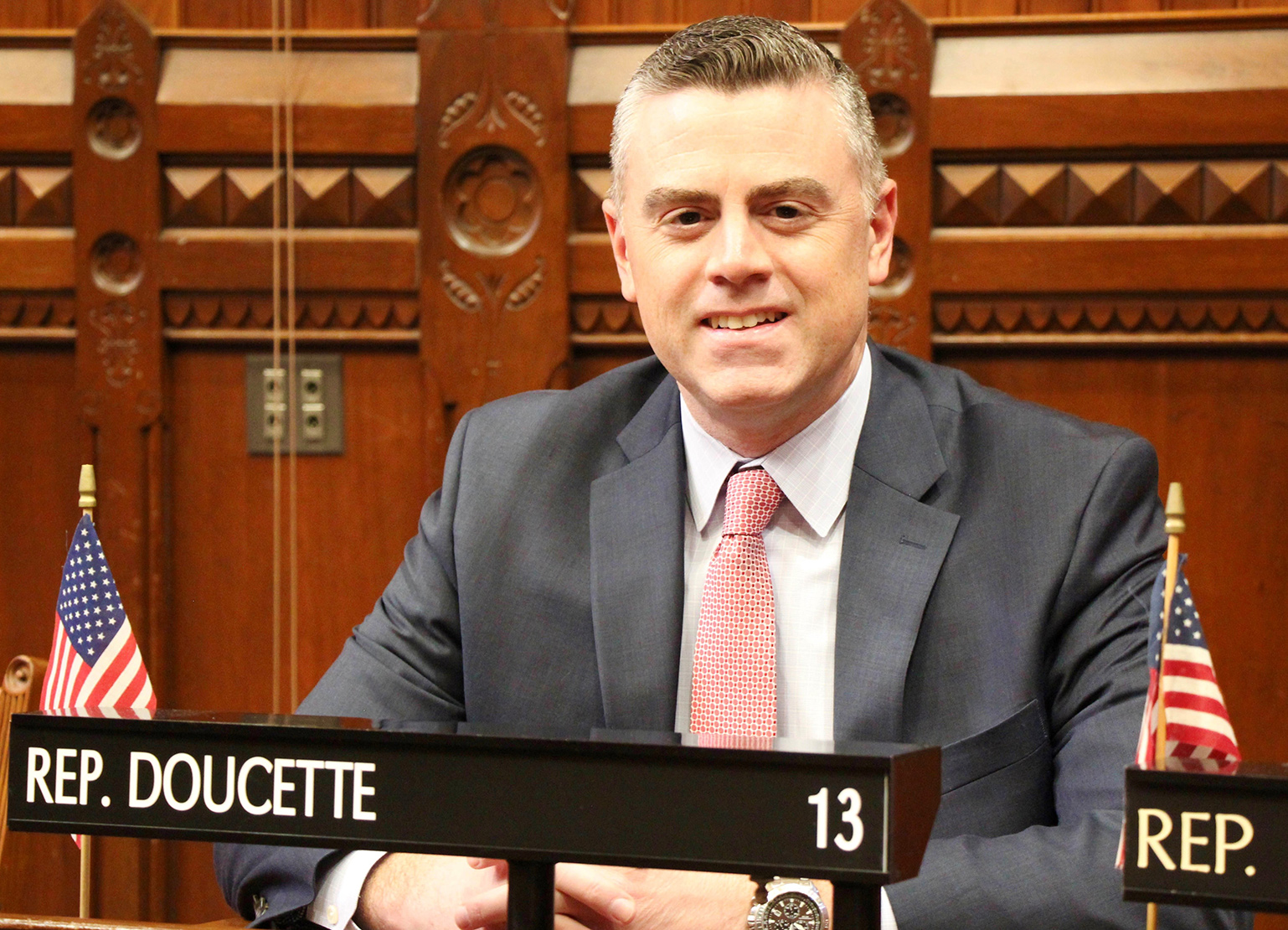
Wishing you and your loved ones a wonderful holiday season filled with warmth, rest, and celebration. As your legislator, it is an honor to represent you, and I am thankful every day for the opportunity to serve our community. May the New Year bring you happiness, stability, and success in all your endeavors. Happy Holidays and Happy New Year!
Happy holidays from my family to yours!
New Laws Effective Jan. 1, 2026
2026 is right around the corner, and here are some of the laws regarding housing, medical services, and incentives for farmers that take effect January 1st.
HOUSING: Housing Growth Plans provide a roadmap to address Connecticut's affordability crisis.
MEDICAL SERVICES: New laws require health insurers to cover certain high-priority biomarker tests that aid in early detection, prevention, and treatment. These laws also prohibit step therapy for individuals living with multiple sclerosis and arthritis, and mental health disorders.
FARMING: We raised the farming machinery property tax exemptions to save Connecticut farmers nearly $144 million a year.
Medical Debt Erased for Thousands of CT Residents
40,000 Connecticut residents received letters in the mail last week informing them that some or all of their medical debt will be erased under an initiative with the national organization Undue Medical Debt to provide relief to those having difficulty paying medical bills.
This is the third round of the initiative, which has now eliminated $198 million for 160,000 Connecticut residents since Dec. 2024. The program's arrangement allows the debt to be forgiven at a fraction of its face value - typically costing a few pennies on the dollar.
Relieving tens of thousands of Connecticut residents from the stress of paying down burdensome medical debt will make a profound difference in their lives - especially in the holiday season.
Emergency Response Fund
We passed a $500 million emergency response fund during November's special session to support residents facing harmful federal cutbacks from the Trump administration. The funding will cover gaps in the Supplemental Nutrition Assistance Program (SNAP), Women, Infants, and Children (WIC), and the Low Income Heating Energy Assistance Program, also known as LIHEAP. Connecticut will not sit by idly as the federal government attacks middle and low-income families.
Now, Governor Ned Lamont is putting a plan in motion to put that fund to use. His proposal calls for committing:
Tens of millions to offset cuts to Affordable Care Act subsidies
$24.5 million to support community food banks and pantries
Nearly $7 million to combat homelessness
$4.7 million for 2-1-1 to increase call volume and Community Action Agencies to support outreach and assistance for SNAP recipients
While the $500 million emergency fund plans to cover the lack of funding for the national Low Income Home Energy Assistance Program (LIHEAP), there are other state resources available now.
The Connecticut Energy Assistance Program and Eversource offer resources for those in need to help to cover the cost of their home energy bills this winter. Visitct.gov/dssorthe Eversource website for more information.
From retirees looking to downsize, to young professionals and families searching for affordable rentals, Connecticut residents at every stage of life share a common goal: finding a safe, stable, and affordable place to call home.
Partnerships are at the heart of this effort. The bill empowers towns to plan for responsible, data-driven growth using insights from state, local, and regional partners to meet the housing needs of today and tomorrow. Developed in partnership with municipal leaders, regional councils, colleagues on both sides of the aisle, and Governor Lamont, this legislation creates a collaborative and practical framework through local Housing Growth Plans.
The legislation also encourages the redevelopment of underused properties, from aging strip malls to vacant commercial spaces, and promotes transit-oriented development that connects residents to jobs, schools, and public transportation. By combining innovation with local control and targeted support, we’re strengthening the partnership between the state and municipalities to modernize infrastructure, improve zoning and land-use planning, and create vibrant, inclusive communities across Connecticut. There’s still more work ahead, but An Act Concerning Housing Growth marks a major step forward in our shared effort to expand housing opportunities, support local economies, and ensure every Connecticut resident can find, and afford, a home in a community they’re proud to call their own.
Strengthening Children's Behavioral Health Care
We also passed legislation through a comprehensive bill that continues to build on House Democrats’ commitment to children’s behavioral health care.
Highlights include:
Statewide study to assess the demand for children’s behavioral health services and improve data collection
New grant program to support care coordination and resource navigation for kids and families
Insurance companies must now cover autism treatments, including applied behavior analysis and cognitive behavioral therapy, up to age 26
Adding substance abuse treatment providers for children to Transforming Children’s Behavioral Health Policy and Planning Committee (TCB)
Together, these measures represent a stronger, more coordinated system of care for Connecticut’s children.
Connecticut Expands Early Childhood Program
Thanks to the Early Childhood Education Endowment, an initiative that was passed by the General Assembly in the 2025 legislative session, the expansion of the Early Start CT program in 2026 marks an important step forward in meeting the growing demand for high-quality early childhood care and education across Connecticut.
Beginning in January 2026, up to 1,000 new spaces will be added to the state’s Early Start CT program, expanding access to affordable early learning opportunities for more families. In addition, the state will increase provider payments by up to 8% to help offset operational costs and support higher staff compensation. The endowment supports the governor’s initiative to implement the largest expansion of early childhood education services in Connecticut’s history. We are thrilled about this program and the tremendous benefits it will bring to children, families, and communities across the state.
Early Start CT is a state-funded early care and education program serving income-eligible families with infants, toddlers, preschoolers, and school-age children. The program is administered by the Connecticut Office of Early Childhood (OEC).
To support this expansion, OEC will soon launch a Request for Applications (RFA) for child care providers interested in offering Early Start CT spaces. The RFA will be open to child care centers, group child care homes, family child care homes, and public school preschool classrooms throughout the state.
Click here for more information on Early Start CT.
As always, please feel free to email me at Jason.Doucette@cga.ct.gov or call my office at 860-240-8584.